The Dark Matter Mystery
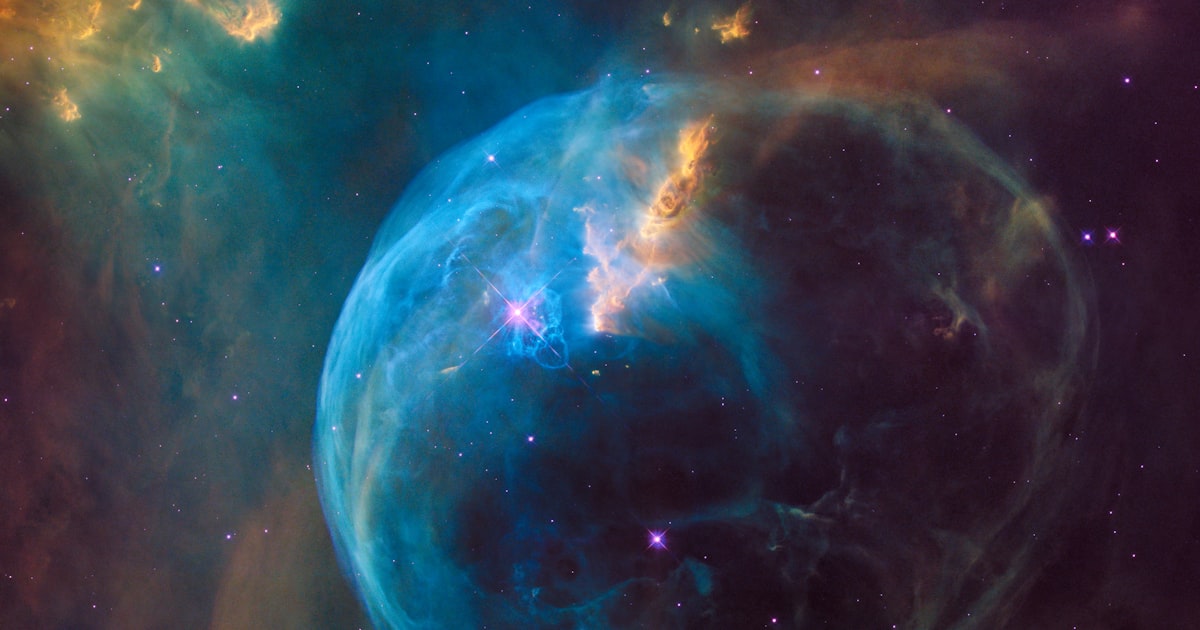
One of the most profound puzzles in modern physics is that the vast majority of the universe is invisible. Ordinary matter, everything we can see, touch, and measure directly, accounts for only about 5 percent of the total mass-energy content of the cosmos. The remaining 95 percent is split between two enigmatic components: dark matter at roughly 27 percent and dark energy at about 68 percent. Understanding these hidden constituents is one of the greatest challenges facing science today.
Evidence for Dark Matter
The idea that unseen mass pervades the universe dates back to the 1930s, when Swiss astronomer Fritz Zwicky noticed that galaxies in the Coma Cluster were moving far too fast to be held together by visible matter alone. In the 1970s, astronomer Vera Rubin provided compelling evidence by measuring the rotation curves of spiral galaxies. She found that stars at the outer edges of galaxies orbit at roughly the same speed as those closer to the center, which defies expectations based on visible mass. This flatness of rotation curves implied a vast halo of unseen matter surrounding each galaxy. Additional evidence comes from gravitational lensing, where the gravity of massive galaxy clusters bends light from more distant objects, revealing more mass than can be accounted for by visible stars and gas. Observations of the cosmic microwave background radiation, the afterglow of the Big Bang, also require dark matter to explain the patterns of temperature fluctuations we observe.
Detection Methods
Scientists are pursuing multiple strategies to identify dark matter particles directly:
- Underground detectors like XENON and LUX-ZEPLIN, which use tanks of ultra-pure liquid xenon to catch the faint signal of a dark matter particle colliding with an atomic nucleus
- Particle colliders such as the Large Hadron Collider at CERN, which attempt to create dark matter particles by smashing protons together at near-light speeds
- Space-based observatories searching for indirect signatures, such as gamma rays or antimatter particles produced when dark matter particles annihilate each other
- Axion detectors like ADMX, which search for hypothetical ultra-light particles using strong magnetic fields and resonant cavities
Dark Energy and the Expanding Universe
While dark matter pulls things together through gravity, dark energy does the opposite. Discovered in 1998 through observations of distant supernovae, dark energy is driving the accelerating expansion of the universe. The nature of dark energy is even more mysterious than dark matter. It could be a cosmological constant, an intrinsic energy of empty space, or it could be a dynamic field that changes over time. Some physicists have proposed that dark energy might be explained by modifications to Einstein's general relativity at cosmological scales.
What We Still Don't Know
Despite decades of research, no dark matter particle has been directly detected. The leading candidates, weakly interacting massive particles known as WIMPs, have eluded every experiment designed to find them. This has led researchers to broaden their search to include alternative candidates such as axions, sterile neutrinos, and primordial black holes. Some theorists have even questioned whether dark matter exists at all, proposing instead that gravity itself behaves differently at galactic scales. The resolution of the dark matter mystery will likely require new physics beyond the Standard Model and may reshape our understanding of the fundamental forces of nature.