Antimatter: The Mirror Universe
Antimatter sounds like something from science fiction, but it is a well-established reality of particle physics. Every particle of ordinary matter has a corresponding antiparticle with identical mass but opposite charge and quantum numbers. When matter and antimatter meet, they annihilate each other in a burst of pure energy, making antimatter both one of the most fascinating and most dangerous substances conceivable.
What Antimatter Is
The existence of antimatter was first predicted in 1928 by British physicist Paul Dirac, whose equation describing the behavior of electrons implied the existence of a positively charged counterpart. This antielectron, or positron, was experimentally discovered by Carl Anderson in 1932, confirming Dirac's theory and earning both scientists Nobel Prizes. Since then, physicists have identified antiparticles for every known particle. The antiproton carries a negative charge instead of a positive one, the antineutron has reversed magnetic properties, and antiquarks carry opposite color charges. In principle, antiparticles can combine to form anti-atoms: in 1995, scientists at CERN created the first anti-hydrogen atoms by combining antiprotons with positrons. These anti-atoms behave like mirror images of their matter counterparts, governed by the same physical laws but with reversed charges.
How Antimatter Is Produced
Antimatter is extraordinarily rare in our universe, but it can be produced artificially in particle accelerators. The process typically involves:
- Accelerating protons or electrons to near the speed of light using powerful electromagnetic fields
- Colliding these high-energy particles with a fixed target or with other particles traveling in the opposite direction
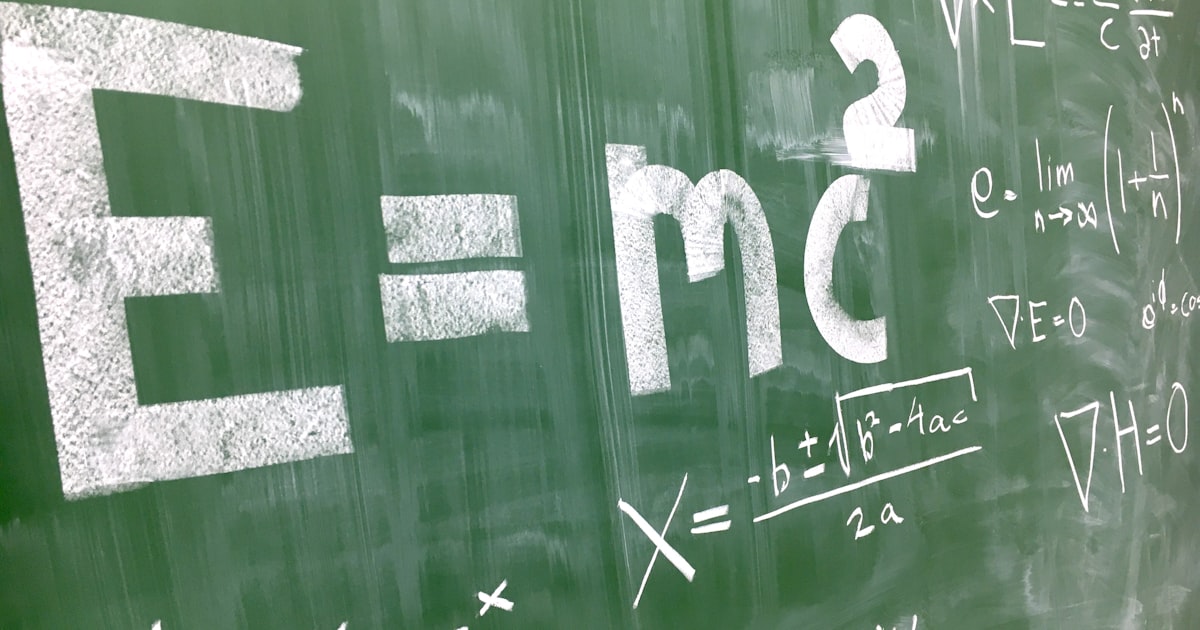
- Converting the kinetic energy of the collision into particle-antiparticle pairs according to Einstein's equation E=mc squared
- Separating the antiparticles from ordinary matter using magnetic fields, since charged particles curve in opposite directions
- Trapping antiparticles in magnetic bottles called Penning traps, which suspend them in a vacuum to prevent contact with matter
Antimatter also occurs naturally. Positrons are produced during certain types of radioactive decay, and cosmic ray collisions in the upper atmosphere generate small quantities of antiparticles. PET scanners in hospitals detect the gamma rays produced when positrons from a radioactive tracer annihilate with electrons in the patient's body.
The Matter-Antimatter Asymmetry
One of the greatest unsolved problems in physics is why the universe is made almost entirely of matter. The Big Bang should have produced equal quantities of matter and antimatter, which would then have annihilated each other completely, leaving a universe of pure radiation and no atoms, stars, or galaxies. Clearly, a slight asymmetry arose in the early universe, roughly one extra matter particle for every billion matter-antimatter pairs. This asymmetry is related to a phenomenon called CP violation, where the laws of physics treat matter and antimatter slightly differently. While CP violation has been observed in particle experiments, the amount detected so far is insufficient to explain the observed imbalance, suggesting that additional physics beyond the Standard Model must be at work.
Potential Applications
If antimatter could be produced and stored in sufficient quantities, its applications would be transformative. Matter-antimatter annihilation converts mass to energy with 100 percent efficiency, compared to less than 1 percent for nuclear fission. A single gram of antimatter reacting with a gram of matter would release energy equivalent to about 43 kilotons of TNT. This has led to theoretical proposals for antimatter-powered spacecraft capable of reaching nearby stars within a human lifetime. In medicine, positron emission tomography already uses antimatter for diagnostic imaging. However, current production methods are staggeringly inefficient and expensive, with estimates placing the cost of a single gram of antihydrogen at roughly 60 trillion dollars. Making antimatter practical will require fundamental breakthroughs in production and containment technology.