The Byzantine Empire
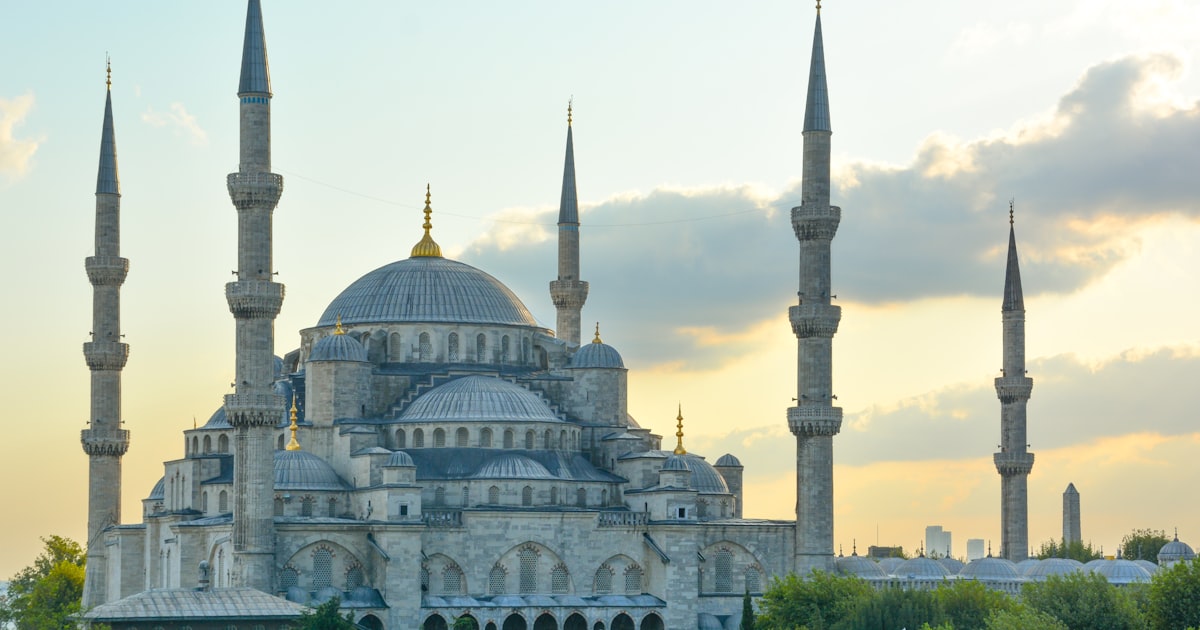
The Byzantine Empire, known to its inhabitants simply as the Roman Empire, was the eastern continuation of the Roman state that endured for over a thousand years after the fall of the Western Roman Empire. From its capital at Constantinople, this remarkable civilization preserved classical knowledge, developed distinctive art and architecture, and served as a bulwark between Europe and successive waves of eastern invaders until its final fall in 1453.
The Eastern Roman Continuation
When the Western Roman Empire collapsed in 476 CE, the eastern half continued to thrive. Emperor Constantine I had founded Constantinople in 330 CE on the site of the ancient Greek city of Byzantium, strategically positioned on the Bosporus strait between Europe and Asia. This location gave the eastern empire control over lucrative trade routes connecting the Mediterranean with the Black Sea and beyond. While the west fragmented into Germanic kingdoms, the east maintained Roman administrative structures, a professional army, and a sophisticated tax system. The Byzantines considered themselves Romans and their state the legitimate continuation of the Roman Empire, even as their language shifted from Latin to Greek and their culture developed distinctive characteristics.
Constantinople: The Queen of Cities
Constantinople was the largest and wealthiest city in the medieval world for much of its existence. Its formidable defenses included the legendary Theodosian Walls, a triple line of fortifications that withstood sieges for over a thousand years. The city's features included:
- The Hippodrome, a massive chariot-racing venue that served as the center of public life and political expression
- The Great Palace complex, a sprawling residence for the emperor with gardens, churches, and ceremonial halls
- Vast marketplaces where merchants traded goods from across three continents
- An extensive system of cisterns and aqueducts ensuring fresh water for up to half a million inhabitants
- Libraries and schools that preserved and transmitted classical Greek and Roman learning
Justinian and the Golden Age
Emperor Justinian I, who reigned from 527 to 565, presided over the empire's most ambitious period. His general Belisarius reconquered North Africa, Italy, and parts of Spain, briefly reuniting much of the old Roman Mediterranean under a single ruler. Justinian's most enduring achievement was the codification of Roman law into the Corpus Juris Civilis, a systematic compilation that became the foundation of legal systems across Europe and influenced legal thought for centuries. He also commissioned the construction of the Hagia Sophia, a masterpiece of engineering with its enormous dome that seemed to float on a ring of light from forty windows at its base. This cathedral remained the largest enclosed space in the world for nearly a thousand years and still stands as one of humanity's greatest architectural achievements.
Art, Architecture, and the Fall
Byzantine art developed a distinctive style characterized by rich mosaics, iconic religious imagery, and lavish use of gold. Icon painting became a defining feature of Byzantine religious practice, though the iconoclast controversy of the 8th and 9th centuries saw fierce debate over whether religious images constituted idolatry. Byzantine architects perfected the use of the pendentive, a triangular structural element that allowed a circular dome to be placed atop a square base, enabling the construction of grand domed churches that defined Orthodox Christian architecture.
The empire faced persistent threats from all directions: Persians, Arabs, Bulgars, Normans, Seljuk Turks, and Crusaders all tested Byzantine resilience. The Fourth Crusade of 1204 dealt a devastating blow when western Crusaders sacked Constantinople itself, fragmenting the empire. Although the Byzantines recaptured the city in 1261, the restored empire was a shadow of its former self. On May 29, 1453, Ottoman Sultan Mehmed II finally breached the ancient walls and conquered Constantinople, ending over eleven centuries of continuous Roman civilization. Byzantine scholars who fled westward carried with them manuscripts and knowledge that helped fuel the Italian Renaissance, ensuring that the empire's intellectual legacy lived on even as its political existence ended.