Life in Ancient Rome
Ancient Rome, spanning from its legendary founding in 753 BCE to the fall of the Western Empire in 476 CE, was one of the most influential civilizations in human history. At its peak, the Roman Empire controlled vast territories stretching from Britain to Mesopotamia, governing tens of millions of people under a sophisticated system of laws and administration. Understanding Roman society reveals the foundations upon which much of Western civilization was built.
Social Hierarchy
Roman society was rigidly stratified. At the top stood the patricians, wealthy aristocratic families who dominated political life during the Republic. Below them were the plebeians, the common citizens who gradually won greater rights through centuries of political struggle. Equestrians formed a prosperous middle class of merchants and landowners. At the bottom of the social order were slaves, who could number in the millions and performed everything from household labor to skilled crafts. Freed slaves, known as liberti, occupied an ambiguous social position and sometimes amassed considerable wealth. Social mobility existed but was limited, and a person's birth largely determined their opportunities in life.
Engineering and Infrastructure
Roman engineering achievements were extraordinary and many survive to this day. The Romans perfected the use of concrete, arches, and vaults, enabling them to construct buildings and infrastructure of unprecedented scale. Their engineering legacy includes:
- Aqueducts that transported fresh water over dozens of miles to supply cities
- A road network spanning over 250,000 miles, connecting every corner of the empire
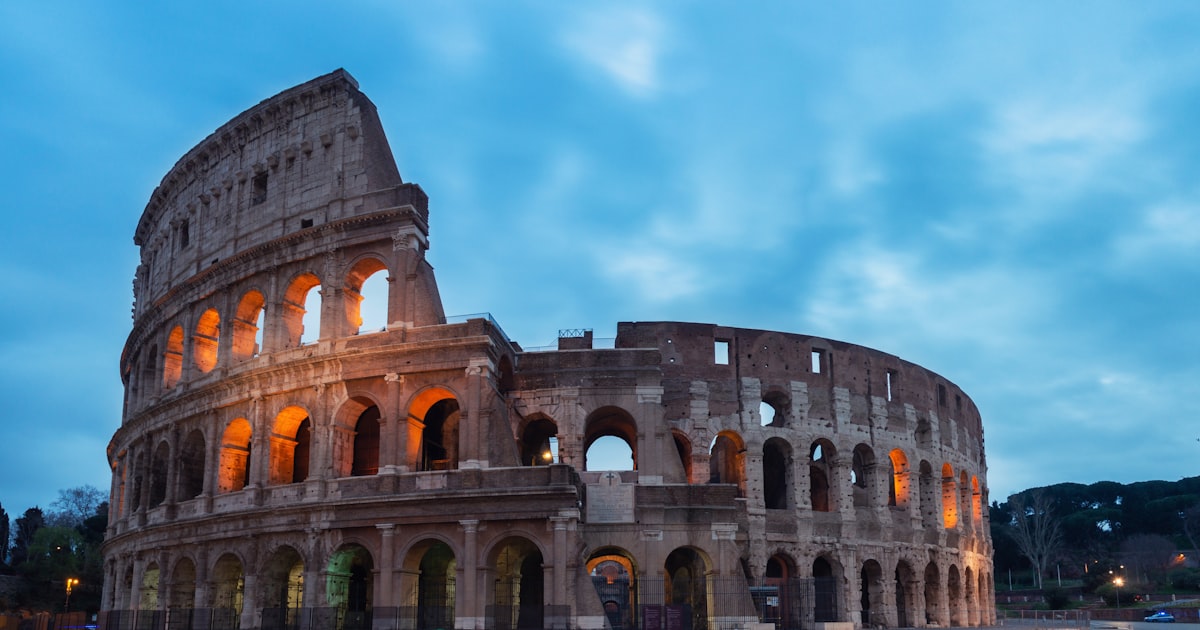
- The Colosseum, capable of seating 50,000 spectators with sophisticated crowd management
- Heated bathhouses with underfloor heating systems called hypocausts
- Sewage systems such as the Cloaca Maxima, one of the earliest large-scale drainage systems
These feats of engineering enabled Roman cities to support large populations with reliable water supplies, sanitation, and transportation networks that would not be matched in Europe for over a thousand years.
Entertainment and Public Life
Romans took leisure seriously, and public entertainment was a central part of urban life. Gladiatorial combat in amphitheaters drew massive crowds, with fighters battling each other or wild animals in spectacular displays. Chariot racing at venues like the Circus Maximus was enormously popular, with fans fiercely loyal to their favored teams. The theater presented comedies and tragedies adapted from Greek originals, while public baths served as social gathering places where citizens of different classes could mingle, exercise, and conduct business.
The Enduring Legacy
Rome's influence on the modern world is immense and pervasive. Roman law forms the basis of legal systems across Europe and Latin America. Latin evolved into the Romance languages, including French, Spanish, Italian, Portuguese, and Romanian. Roman architectural principles, particularly the arch and the dome, continue to inspire builders. Republican government structures influenced the founding fathers of the United States, and the Roman calendar, reformed by Julius Caesar, remains the foundation of the calendar we use today. The very concept of citizenship as a legal status with defined rights and responsibilities is a Roman inheritance that shapes political thought to this day.