The Indian Spice Trail
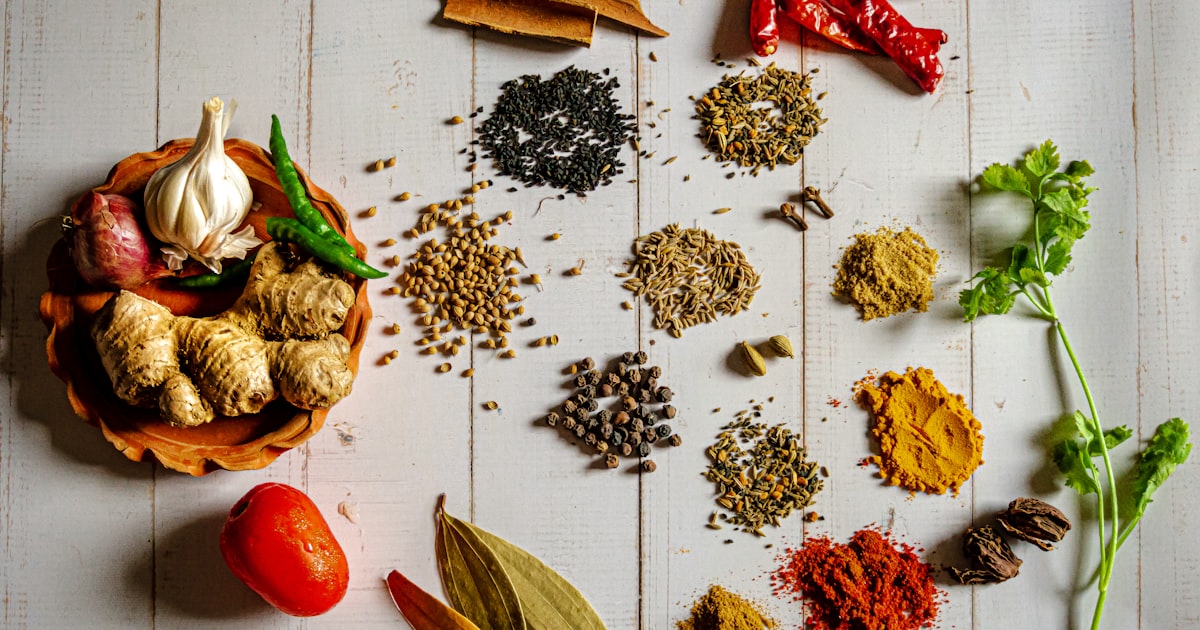
India is the world's largest producer, consumer, and exporter of spices, and its cuisine is built upon a mastery of these aromatic ingredients that stretches back thousands of years. Spices in India are not merely flavor additions; they are medicine, ritual, currency, and cultural identity. The subcontinent's food traditions are so diverse that "Indian cuisine" is really a shorthand for dozens of distinct regional culinary systems, each with its own spice vocabulary.
Key Spices and Their Roles
An Indian kitchen relies on a carefully curated spice collection. The most essential spices, each serving specific culinary and health functions, include:
- Turmeric – The golden spice valued for its earthy bitterness and anti-inflammatory properties. It colors and flavors nearly every Indian dish.
- Cumin – Warm, nutty seeds used whole for tempering (tadka) and ground as a base note in spice blends.
- Cardamom – Both green and black varieties are used. Green cardamom perfumes desserts and chai, while black cardamom adds smoky depth to biryanis and curries.
- Coriander – Citrusy ground seeds form the backbone of many curry powders, while fresh leaves serve as a ubiquitous garnish.
- Mustard seeds – Popped in hot oil at the start of cooking, they release a pungent, nutty flavor essential to South Indian and Bengali dishes.
- Garam masala – A warming blend typically combining cinnamon, cloves, cardamom, black pepper, and cumin, added at the end of cooking for aromatic intensity.
Regional Cuisines
India's twenty-eight states and eight union territories each boast distinctive food traditions. Punjab in the north is known for rich, butter-laden dishes like dal makhani and tandoori meats cooked in clay ovens. Kerala on the southwestern coast uses coconut milk, curry leaves, and black pepper in its fish curries and stews. Rajasthan's arid climate produced a cuisine built around preserved foods, dried lentils, and fiery chili-heavy preparations like laal maas (red meat curry). Bengal in the east celebrates mustard oil, panch phoron (a five-spice blend), and an elaborate tradition of fish cookery, culminating in dishes like shorshe ilish (hilsa fish in mustard sauce).
Curry Fundamentals and Street Food
The word "curry" is a broad Western term that barely captures the range of Indian gravied dishes. At its foundation, most Indian curries begin with a base of onions, ginger, and garlic cooked in oil, to which spices are added in a specific sequence—whole spices first to bloom in the fat, then ground spices for body, and finishing spices like garam masala for aroma. This layered approach to spicing is what gives Indian food its complexity.
India's street food scene is equally rich. Mumbai's chaat stalls serve pani puri (crispy shells filled with spiced water) and vada pav (a spiced potato fritter in a bun). Delhi's Chandni Chowk is famous for paranthas, chole bhature, and jalebi. Kolkata offers kathi rolls—grilled kebabs wrapped in paratha—while Hyderabad's streets are lined with biryani vendors and haleem stalls.
Ayurvedic Food Philosophy
Underlying much of Indian cooking is Ayurveda, the ancient system of medicine that classifies foods by their effect on the body's three doshas (vata, pitta, kapha). Ayurvedic principles hold that spices are not just flavoring agents but tools for maintaining health: turmeric reduces inflammation, ginger aids digestion, and black pepper enhances nutrient absorption. This connection between kitchen and pharmacy is a defining feature of Indian food culture, ensuring that every meal is designed to sustain both pleasure and well-being.