The Evolution of Hypercars
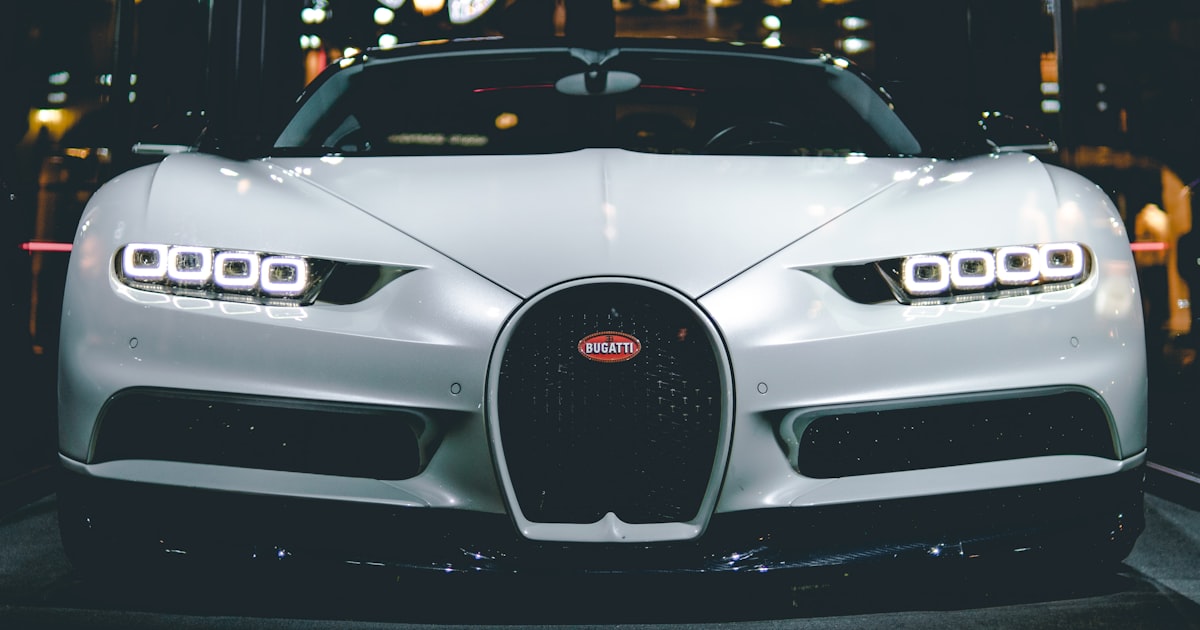
Hypercars represent the absolute pinnacle of automotive engineering. These are not merely fast cars; they are rolling laboratories where manufacturers push the boundaries of physics, materials science, and aerodynamics to create machines that redefine what is possible on four wheels. With production numbers often limited to a few hundred units and price tags stretching into the millions, hypercars occupy a rarefied space where technology, art, and exclusivity converge.
The McLaren F1: Where It All Began
While earlier supercars like the Lamborghini Miura and Ferrari F40 were extraordinary, the 1992 McLaren F1 is widely considered the first true hypercar. Designed by Gordon Murray, it was built with a singular obsession: to be the ultimate road car. Its central driving position, gold-lined engine bay, and naturally aspirated BMW V12 producing 627 horsepower were revolutionary. The F1 held the production car top speed record at 240 mph for over a decade. Only 106 were ever built, and today they command prices exceeding $20 million at auction. The F1 established the hypercar formula: extreme performance, cutting-edge technology, and deliberate scarcity.
The Holy Trinity
In 2013, three manufacturers simultaneously released hybrid hypercars that redefined the segment. Known collectively as the "Holy Trinity," these cars proved that electrification could enhance rather than diminish performance:
- McLaren P1 – Combined a twin-turbo V8 with an electric motor for 903 horsepower and Formula One-derived active aerodynamics.
- Porsche 918 Spyder – A plug-in hybrid with a naturally aspirated V8 and two electric motors, capable of running in pure electric mode.
- Ferrari LaFerrari – Paired a 6.3-liter V12 with a HY-KERS system derived from Ferrari's F1 program, delivering 950 combined horsepower.
All three were limited to fewer than 500 units and sold out immediately, with secondary market values climbing well above their original prices.
Speed Records and Engineering Feats
The pursuit of top speed records has driven some of the most impressive engineering achievements in automotive history. The Bugatti Veyron shattered expectations in 2005 with its 253 mph top speed, achieved through a quad-turbocharged W16 engine producing 1,001 horsepower. Its successor, the Chiron, pushed that figure past 300 mph in a modified variant. The SSC Tuatara and Koenigsegg Jesko Absolut have targeted even higher numbers. Beyond straight-line speed, hypercars now chase lap records at circuits like the Nürburgring Nordschleife, where the Porsche 919 Hybrid Evo set an astonishing 5:19.55 lap time in 2018.
The Future of Hypercars
The next generation of hypercars is embracing full electrification. The Rimac Nevera, with its 1,914 horsepower from four electric motors, proved that battery-electric hypercars can match and exceed their combustion predecessors in both acceleration and handling. The Mercedes-AMG ONE brought a Formula One hybrid powertrain to the road, complete with an engine that revs to 11,000 rpm. Gordon Murray's T.50, meanwhile, took the opposite approach, using a lightweight, naturally aspirated V12 and a rear-mounted fan to create a spiritual successor to the McLaren F1. Whether electric, hybrid, or combustion, hypercars will continue to serve as the ultimate expression of what automotive engineering can achieve.